Insulation & Insulated Ducting
Special attention has to be paid when it comes to insulating ventilation ducts. Distinguishing between 4 zones we recommend following insulation:
A) Ducts carrying air with outside temperature (intake and exhaust) within the thermal envelope
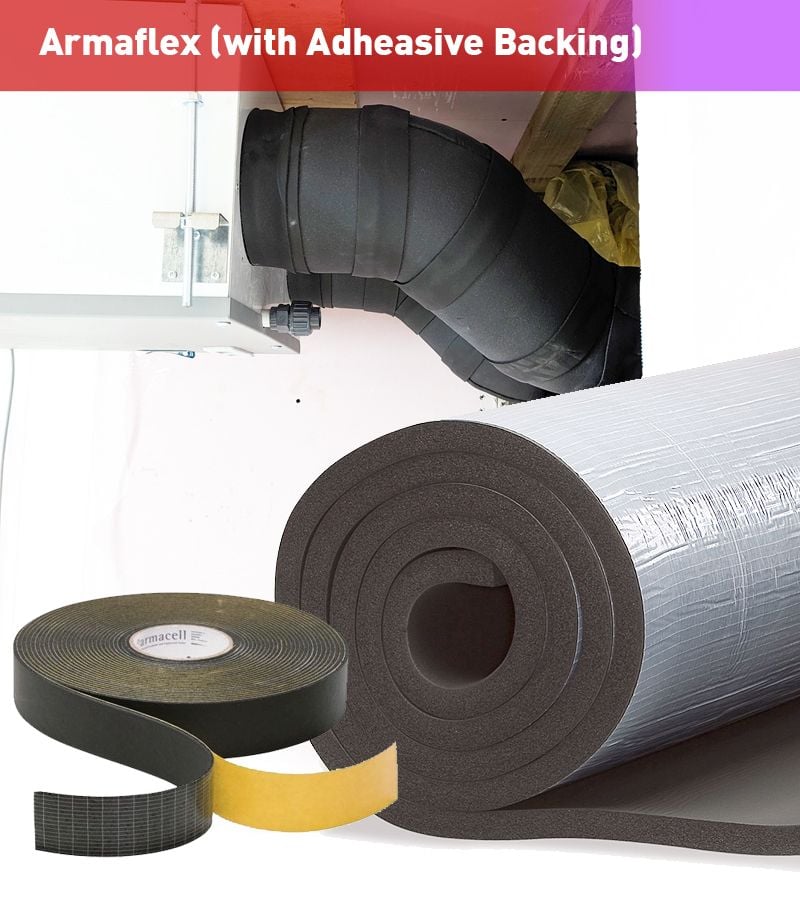
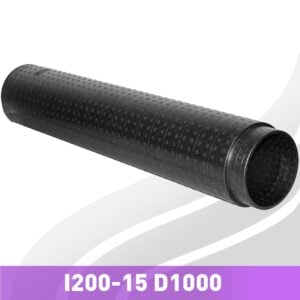
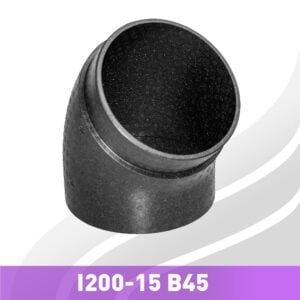
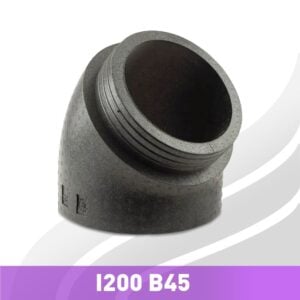
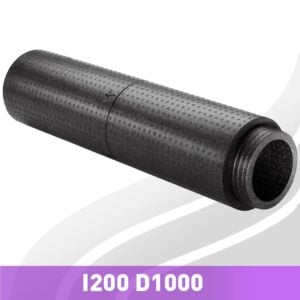
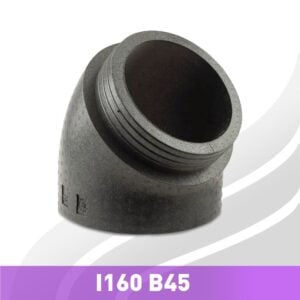
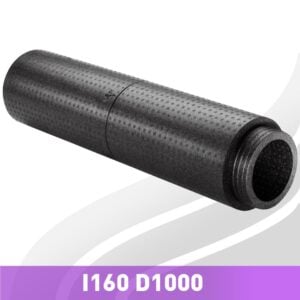
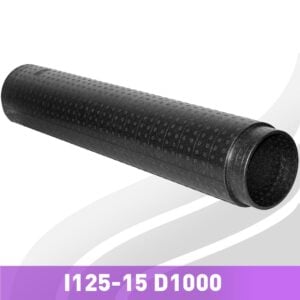
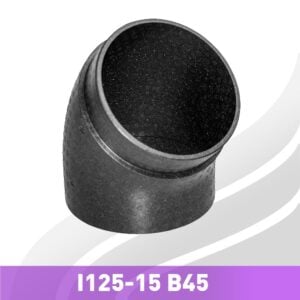
Vapour resistant insulation of at least 25mm – e.g. Armaflex or pre-insulated ducts. Without vapour barrier, normal insulation material will attract condensation and loose its insulating qualities.
B) Ducts carrying air with outside temperature (intake and exhaust) outside of the thermal envelope
Vapour resistant insulation of at least 25mm.
C) Ducts carrying air with ambient temperature within the thermal envelope
Usually no insulation required.
D) Ducts carrying heated supply air within the thermal envelope
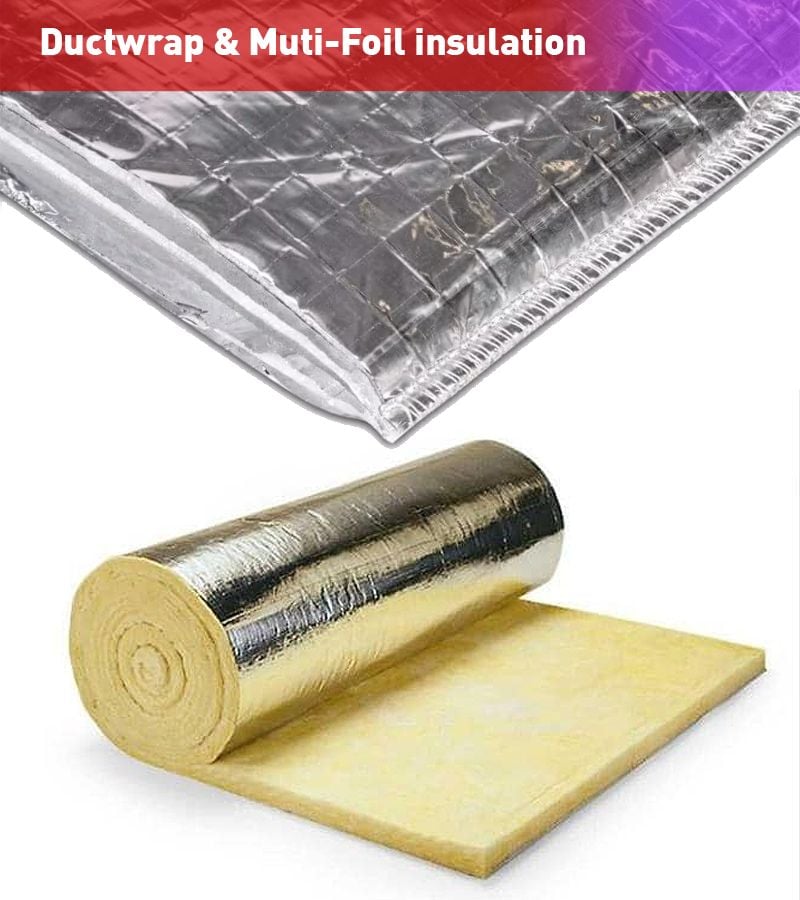
6-25mm of insulation, e.g. ductwrap.
E) Ducts carrying air with ambient temperature pertruding out of the thermal envelope
50-100mm of insulation, e.g. ductwrap.
Ducts of category A should be kept as short as possible to prevent heat losses and reduce costs for insulation.
Ducts of category D should be avoided, e.g. in a cold loft by placing the loft insulation over the ducts.
Please also note to avoid placing ambient ducts within the insulation layer of outside walls or ceilings. Weakened insulation is a cold bridge and reduced the efficiency of the HRV system.
Legal requirements for duct insulation in unheated spaces:
Ducting should be insulated where it passes through unheated areas and voids (eg loft spaces) to reduce the possibility of condensation forming. This may be achieved by using a layer of insulation that provides an R value of ≥0.625K/W per m². Alternatively, 25mm thick insulating material with a K value of ≤0.04W/m K. According to the English ADF 2026, 50mm for cold ducting inside of the thermal envelope.
What is K-value? It represents the thermal conductivity of a material, and it measures its ability to conduct the heat. The lower the K-value, the better the insulation is.
What is R-value? It measures the thermal resistance of a certain depth of insulation against the conductive flow of heat. The higher the R-value, the better the insulation is.
How to convert a K-value into a R-value? R = L (thickness of the material in m) / K
| Type of insulation |
K-value = thermal conductivity |
25mm of 0.04 W/m K |
50mm of 0.04 W/m K |
| Ductwrap: Quilt insulation with alu backing |
0.033 W/m K |
25mm |
50mm |
| Armaflex: Closed cell insulation sheets |
0.0349 W/m K |
19mm |
2x 19mm (38mm) |
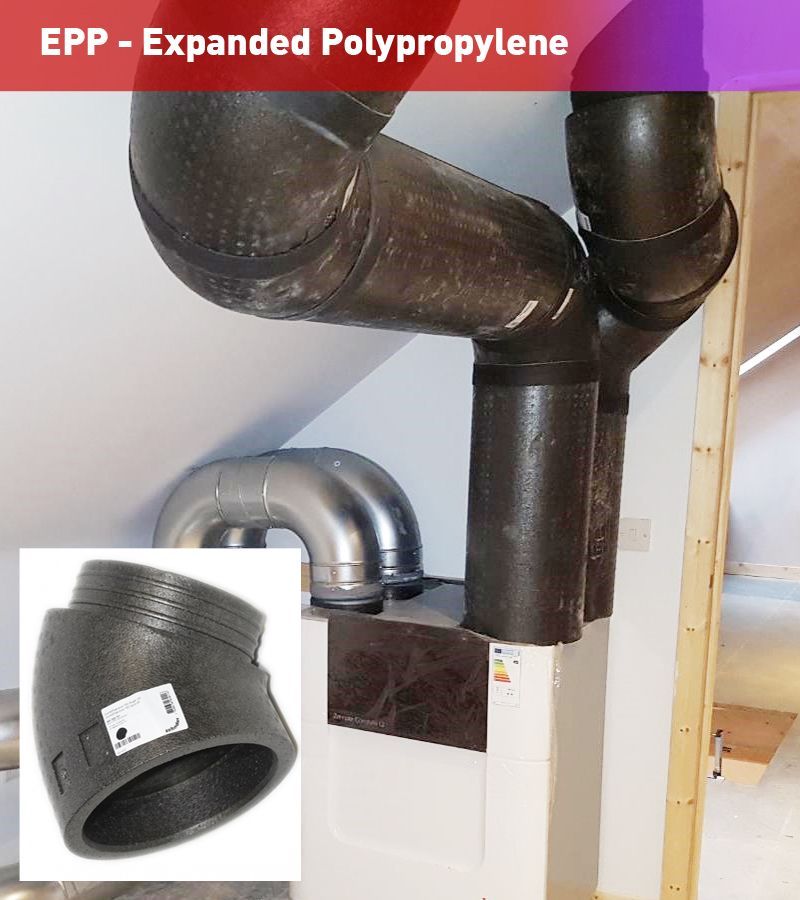
| EPP: Rigid foam ducting, e.g. Zehnder ComfoPipe Plus |
0.035 W/m K |
20mm |
43mm |
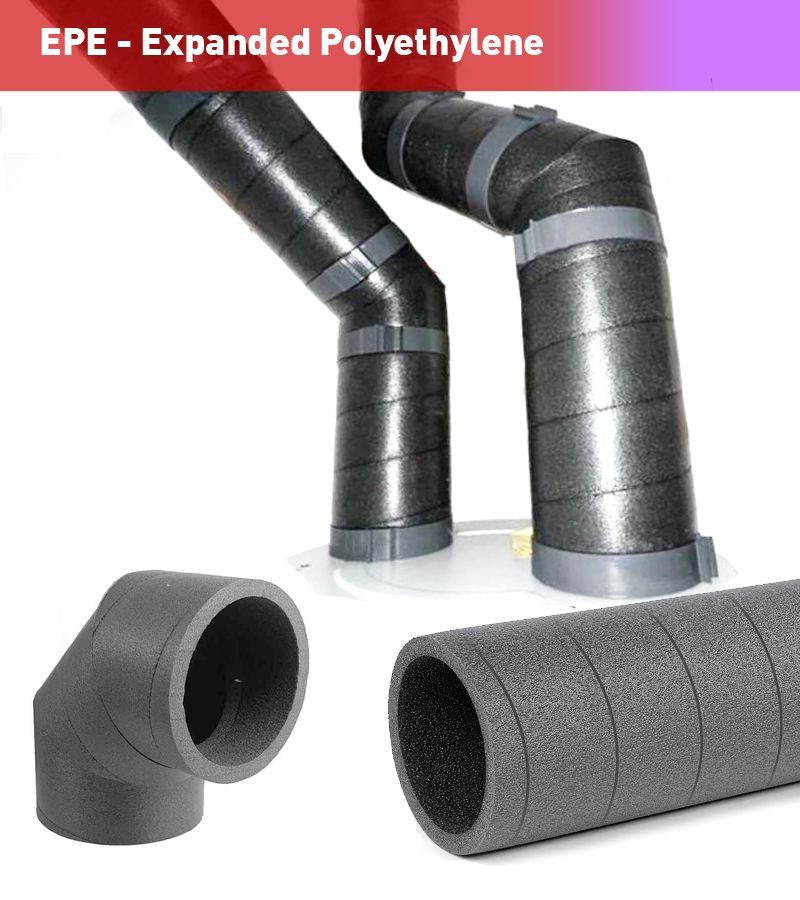
| EPE: Slightly flexible foam ducting |
0.041 W/m K |
30mm (25.6mm) |
55mm (51.2mm) |
| Phenolic insulation: Rigid boards, e.g. Kingspan Coolduct |
0.022 W/m K (at 10°C) |
20mm (13.8mm) |
30mm (27.5mm) |