Building Standards

and technical guidance
for domestic ventilation

Building Regulations for Domestic Ventilation

There are different Building Standards for ventilation and overheating in England/ Wales and Scotland.

On top there is guidance of various other bodies for ventilation systems.


Scottish Technical Handbook - Domestic

Section 3.14 gives guidance on domestic ventilation. The ventilation methodology has changed and almost aligned with the English ADF in 2023.

Section 2.2 gives guidance on fire separating walls and ceilings.

Section 6 gives guidance on mechanical ventilation and air conditioning.

Since 2023 the ‘Supporting Guidance Domestic Ventilation’ has been incorporated into the Technical Handbook as Appendix 3.1.

Scottish Technical Handbook
Approved documents

Approved Document F, O and B for England and Wales

Approved Document F, Volume 1 deals with domestic ventilation. This standard is only applicable in England and Wales.

Approved Document O deals with the limiting of the overheating risk.

Approved Document B deals with limiting the risk of fire.


Calculating the Ventilation Rate

According to the ADF/ Scottish Technical Handbook (STH) the minimum ventilation rates for dwellings are calcularted for the…

  • Nominal ventilation rate, which is the normal operation mode. This is the higher value of one of the following:
    • the floor area of the dwelling
    • the number of bedrooms (ADF) or seperate habitable rooms (apartments) (STH)
  • Boost ventilation rate, which is an increased ventilation rate to expel humidity more quickly.
    • The boost rate is based on the number of wet rooms and their associated min. high ventilaiton rates. If the boost rate comes out lower than the nominal rate, it is adjusted to the nominal level (or above).

ventilation rates
best practice

What Else to Consider

Over and above these statuatory minimum requirements, there is a number of other considerations that a specifyer would take into consideration, over and above the minimum requirements of the UK Building Standards. Unfortunately none of these set standards for Indoor Air Quality targets.

Passive House Guidance

The Passive House Guidance is giving more specific details to well performing systems, curated from decades of research and practitioner’s knowledge of European and UK experts. These specifcally ensure that there is e.g.:

  • high real heat recovery rates (very different test methodology from UK testing),
  • very little heat loss through ductwork,
  • very low loise levels,
  • high durable and cleanable ductwork

PH MVHR Guidance
FHS

Future Homes Standard

The Future Homes Standard for England is to ensure that new homes will produce 75-80% fewer carbon emissions than those built under current Building Regulations. The Regulations will come into force on 24 March 2027, except that regulations 3, 4, 6, 7, 8 and 9 come into force for higher-risk building work and work to existing HRBs on 24 September 2027, subject to transitional provisions.

Below are the key points for ventilation systems:

FHS: Key Points

  1. The move away from flexible ductwork, which is already bad practice due to its high resistance and because it can be easily damaged and can never be cleaned.
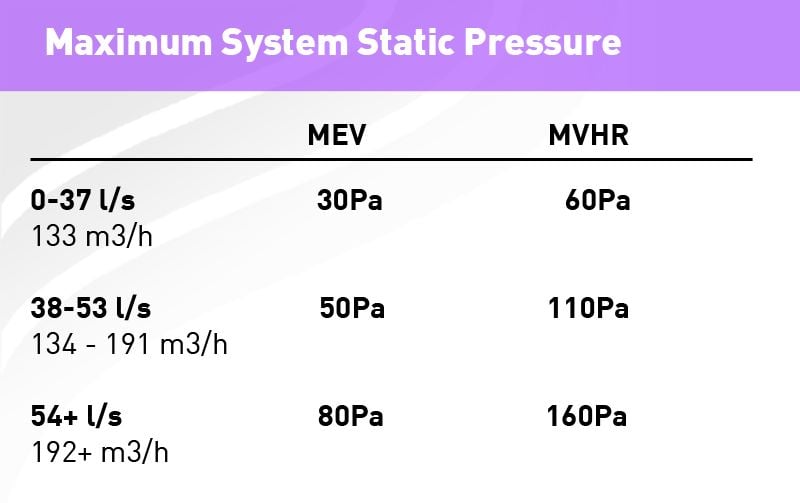
  2. More considered ventilation planning: Introducing pressure‑drop calculations for new MEV and MVHR systems, as well as dMEV with ducting more than 2m.
  3. A proposed move to installer accreditation: New ventilation systems must be commissioned by a member of a competent person’s scheme or by the Building Control Body.
  4. More comprehensive tests at commissioning: Powered flow hoods must be used. Rotating vane anemometers will no longer be permitted.

mvhr design
NHBC Standard

NHBC Standards

Chapter 8.3 gives guidance on MVHR systems for controlled dwellings by the NHBC. This applies for NHBC mortgage lenders.

Healthy Homes Standard

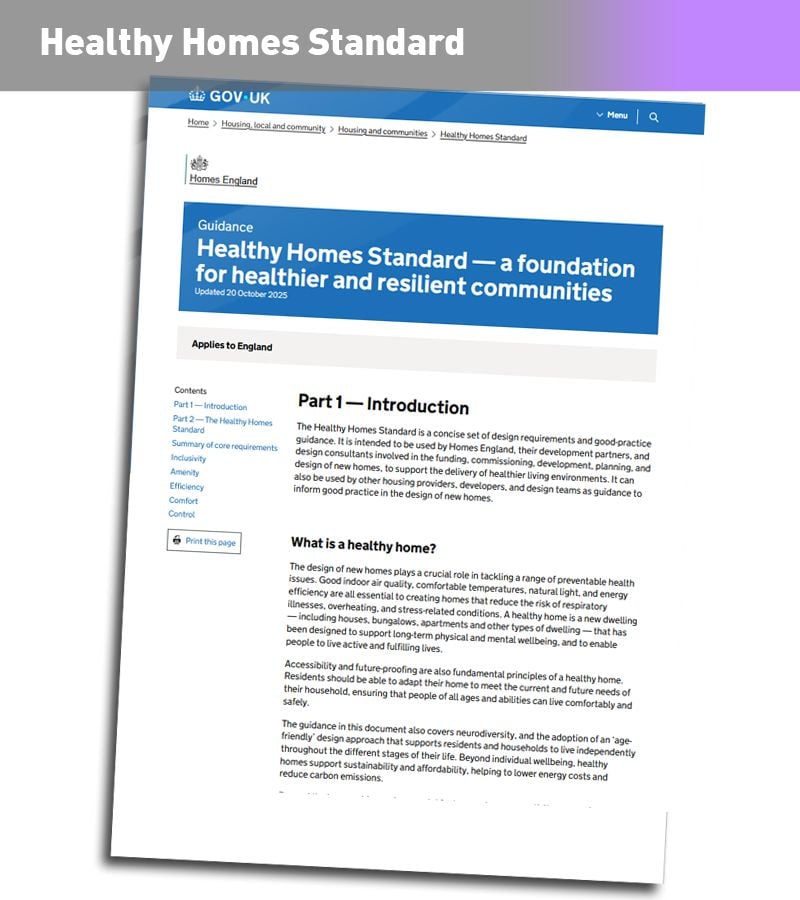
The Healthy Homes Standard is a concise set of design requirements and good-practice guidance. It is intended to be used by Homes England, their development partners, and design consultants involved in the funding, commissioning, development, planning, and design of new homes, to support the delivery of healthier living environments. It can also be used by other housing providers, developers, and design teams as guidance to inform good practice in the design of new homes.

Healthy Homes Standard
PAS 2035

PAS 2035

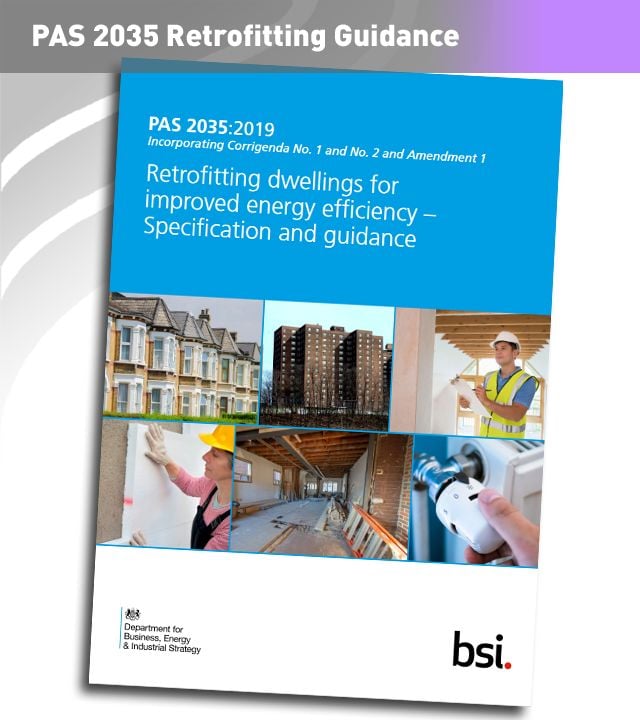
PAS 2035 is a guide for  publicly financed retrofit projects. It sets out standards that should make sure such projects are coherent and don’t require retrofitting of the retrofit measures.

Awaab's Law

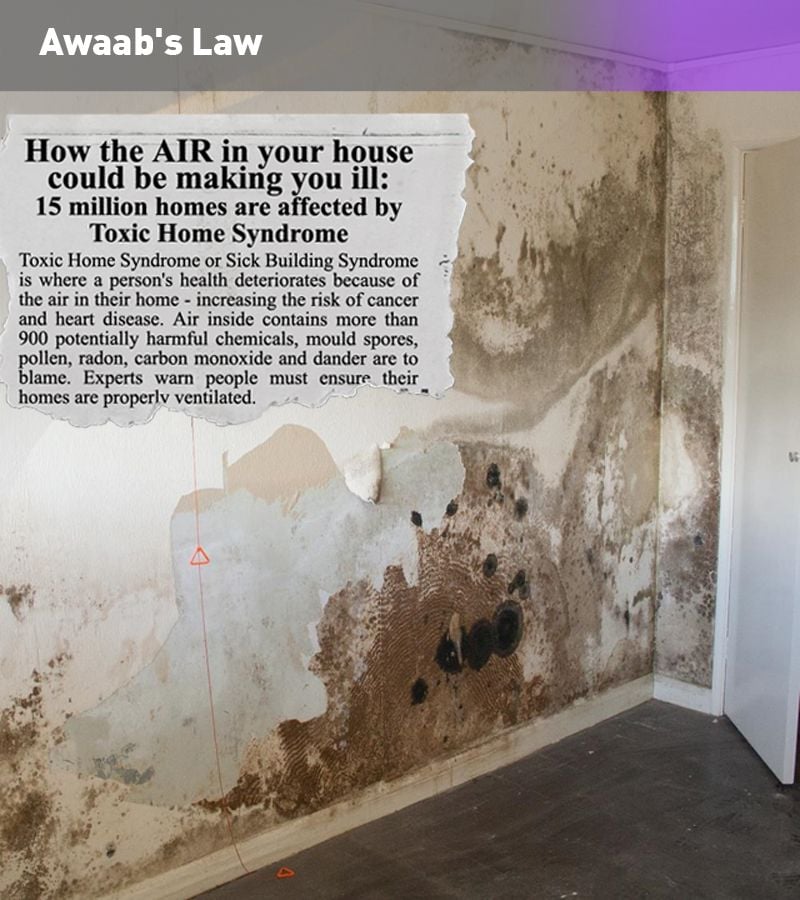
The death of a two year old boy Awaab Ishak – which was attributed to the mould-infestation of his home – has highlighted a common problem: landlords were slow to react to complaints of critical housing defects or didn’t react at all.

From the 27th October 2025 all landlords must:

  • Investigate hazards within 10 working days
  • Share findings with the tenants within 3 days
  • Complete urgent safety works within 5 days
  • Begin further works within 5 days / or 12 weeks if more complex


Awaabs law

Further Information

Latest News

Dandashill Platform 3 Passive House Development

Passivhaus deemed to satisfy UK NZCBS

Passivhaus deemed to satisfy UK NZCBS The Passivhaus standard is now deemed to satisfy certain aspects of the UK Net Zero Carbon Buildings Standard (UK…

Glasgow Homebuilding & Renovation Show

Scottish Homebuilding & Renovating Show

Scottish Homebuilding & Renovating Show Glasgow PAUL Heat Recovery is exhibiting at the SEC in Glasgow on the 9th and 10th May 2026. Please visit…

Big Magic training

Big Magic Installer Training

Big Magic Installer Training May 2026 PAUL Heat Recovery hosts a product training event for the Big Magic MVHR system on Thursday 7th May 2026…

Launch of Zehnder Academy

Launch of the UK Zehnder Academy

Launch of the UK Zehnder Academy As Approved Zehnder Partner we were invited for the official launch of the UK Zehnder Academy in Camberley on…

Information on Domestic Ventilation

ventilation

MVHR Guide

mvhr second fix