Don't Forget...

a suitable ventilation strategy for retrofits,
It can make or break a renovation project

Ventilation for Retrofit Projects

What is the issue?

We are often contacted by home owners, who are renovating existing properties, either to extend them or to make them more energy efficient. They install new glazing, add insulation and draft proofing in order to reduce heating costs and cold drafts.

 that by upgrading an existing dwelling the risk of black mould triples?

Why is the endeavour to improve a property potentially endangering the health of the occupants? Because often it is overlooked to apply an appropriate ventilation strategy. Whilst living in a drafty dwelling, there seems to be no need to think about fresh air. However, if most of the drafts have been blocked off and new air tight windows have been installed, the air infiltration rate is often greatly reduced. Especially in older properties this is more critical than in new builds, as inevitably there will be more cold bridges – parts of the external shell which could not be insulated as much as other parts. These areas have a colder inner surface temperature and attract condensation, which over time leads to mould growth.

Therefore it is important to think about a suitable ventilation strategy when older dwellings are being upgraded, either through new glazing, draft proofing or added insulation.

iaq
Ventilation Strategies

Finding a Suitable Ventilation Strategy

  • Natural ventilation with intermittant extract fans and trickle vents in all rooms is a solution for less air tight dwellings.
  • The type that is easiest to install in retrofit projects is Positive Input Ventilation (PIV), a simple fan that blows air from the cold loft into a central space. It has shown good results in minimising the risk of mold infestation, but it is not guaranteeing good indoor air quality, nor does it deal directly with moisture from cooking and showering.
  • Continuous extract ventilation (MEV and dMEV) are better at dealing with humidity at source, but they are hit and miss in terms of indoor air quality.
  • Correctly specified Heat Recovery Ventilation (MVHR) is a solution that can deal with moisture and pollution and can provide good indoor air quality. These are the only systems that can filter nasties from the outside air, like pollen, midges, traffic fumes and combustion products. They are the more difficult to install, but it is not impossible.


Is MVHR Suitable for My Project?

Following points can be indicators that MVHR is feasible:

  • If the building’s air permeability will be dropped to 5 m3/(h m2) at 50Pa.
    This can, in many cases, be achieved when new air tight windows are being installed (without trickle vents) and the property is being draft-proofed (floor, walls, penetrations into the loft).
  • If the renovated building is close to a busy road, railway line or flight path, which is too noisy to keep the windows open at night.
  • If there is existing moisture issues in the dwelling (other than structural ones), MVHR systems have an additional benefit as they passively de-humidify in the colder seasons.
  • If occupants suffer from respiratory issues or certain types of allergies.

Ventilation is health
mvhr design

How Could MVHR Be Installed?

The approach to a ventilation strategy is probably as diverse as the types of buildings involved:

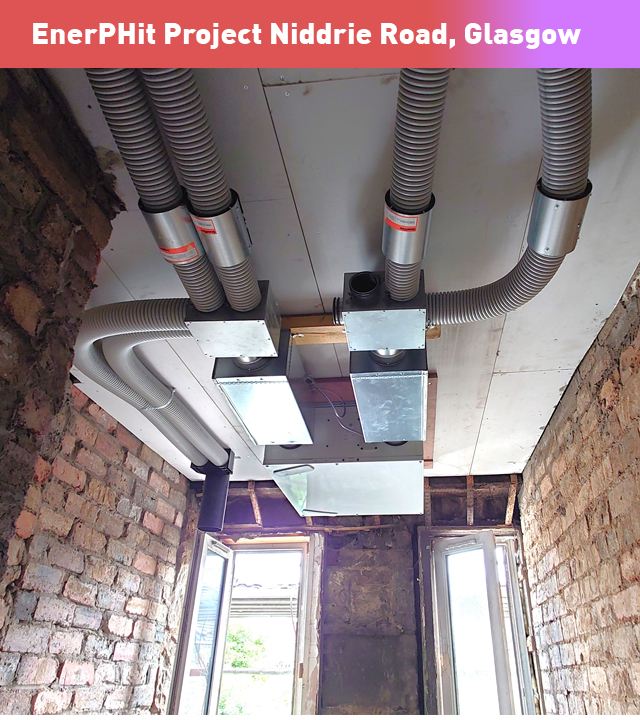
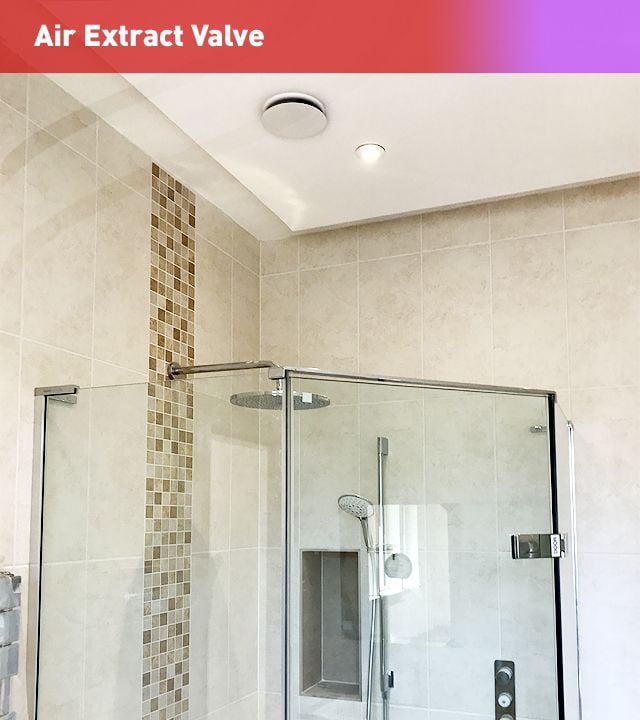
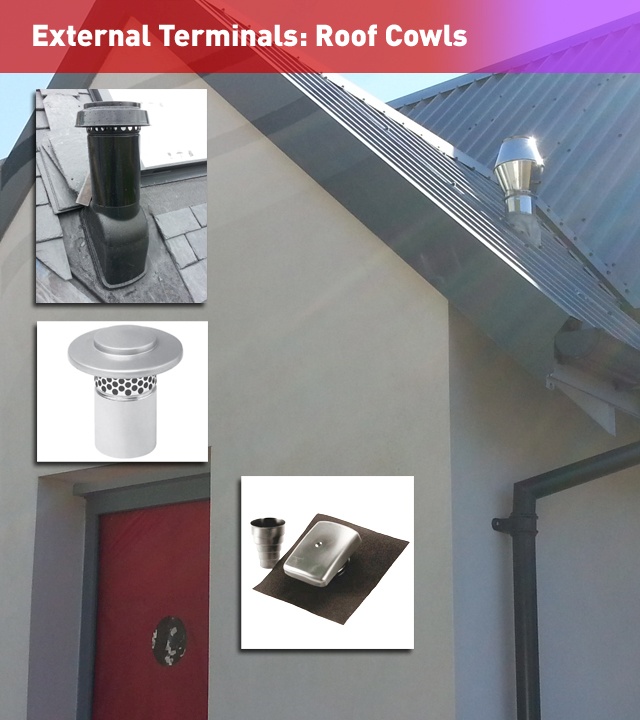
  • For bungalows with a cold loft, it is relatively easy and undisruptive to install an MVHR system in the loft. Semi-rigid ducting can often be laid underneath the loft insulation, which in many cases will be topped up anyway. Within the rooms only a 130mm hole in the ceiling needs to be drilled for air supply and air extract terminals. External terminals are ideally situated in the gable wall.
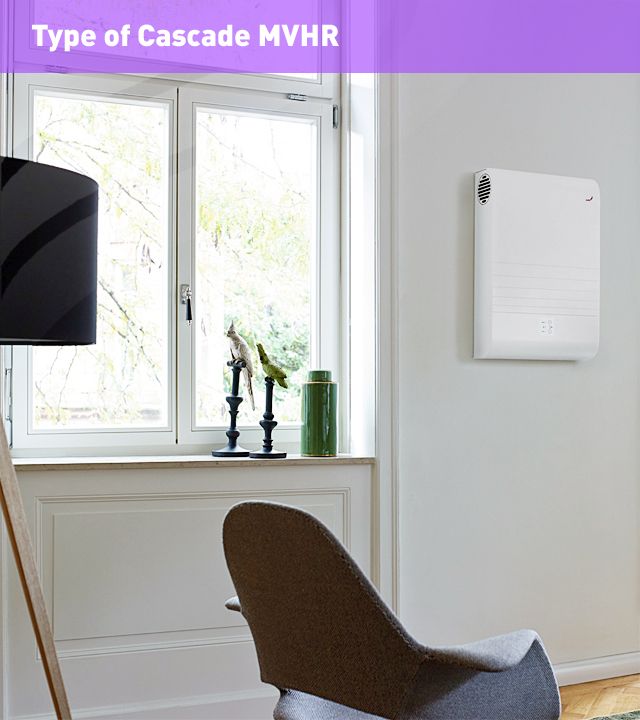
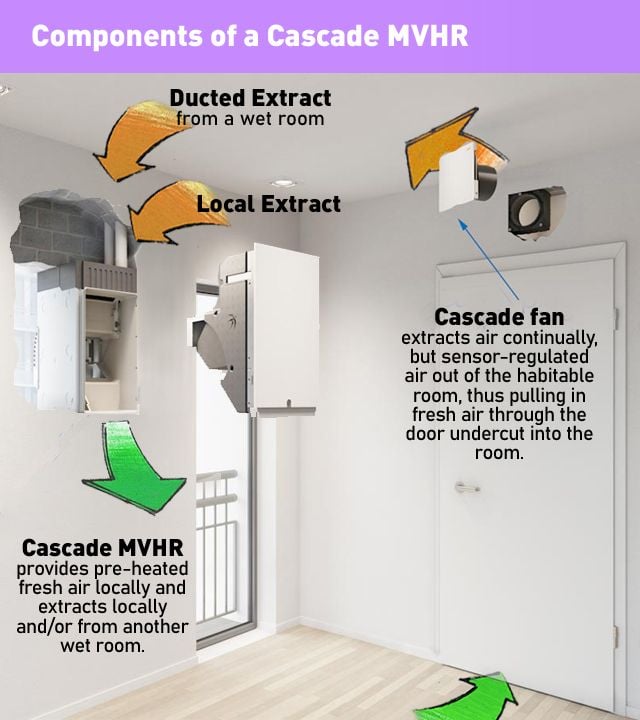
  • For two storey buildings with a cold loft, the same set-up as for bungalows can be applied. However, it will be a bit more disruptive. Ground floor rooms can in some cases be reached through riser pipes in the first floor, situated  in built-in wardrobes, store rooms or service shafts. For the ground floor a cascade ventilation approach can also be used or a mix of natural and mechanical ventilation.
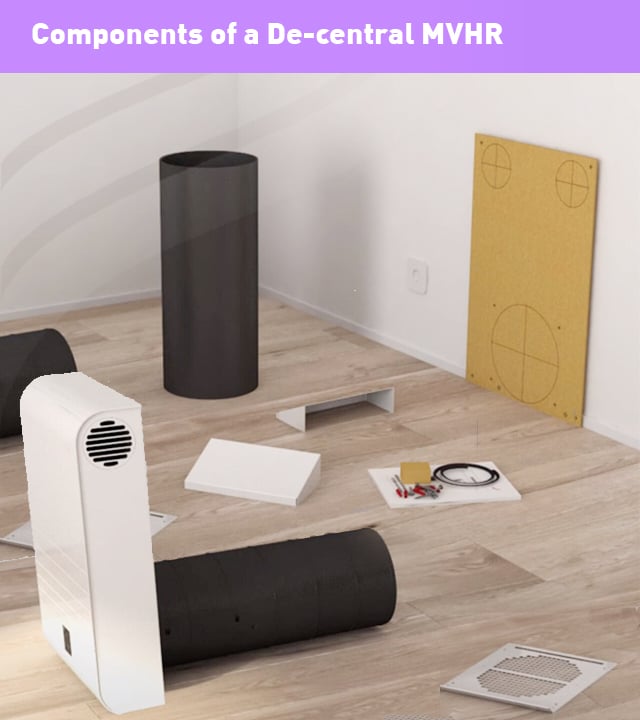
  • For other types of dwelling, part MVHR, de-central MVHR with Cascade Ventilation, dMEV or Positive Input Ventilation (PIV) can be used.

What to Watch Out For

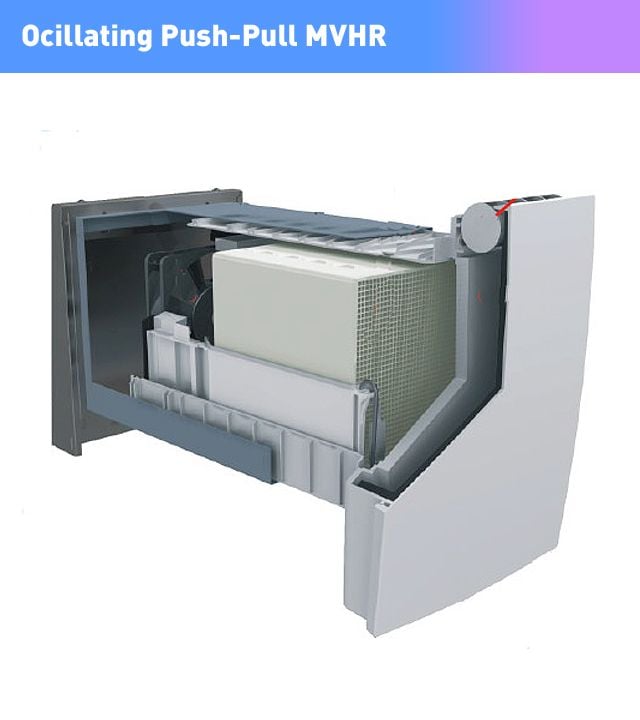
We have learned over time what works, what works better and what does not really work. Whilst we pass on our experience with you, let this not hinder you to do your own research. Push-pull MVHRs are quite common in Europe and are being looked at here in the UK, too. They work on the principle of breating in and out as they change from extracting air to supplying air in regular short intervals. They normally work in tandem with another system and are used to fulfill regulatory requirements for background ventilation. We see three major problems with them:

  • They are very restricted in their ventilation rate before they become noisy. Even for a master bedroom, we would not deem one system enough for good indoor air quality.
  • They cannot be used in wet rooms, as they would push humidity into the dwelling.
  • Case studies have shown that the indoor air quality within the room is not corresponding with the ventilation rate that these systems provide. In simple terms, they just push the air a meter to the left and then back to the right. Some convection in the middle will aid the air quality, but not as good as with a continuously operating MVHR system.

Push-pull MVHR
Retrofit Hub

National Retrofit Hub

We are members of the National Retrofit Hub to co-operate with industry partners and provide practical information on ventilation.

How do we take it from here

If you want to explore the possibilities to ensure good air quality for your property

We look at each case individually to propose a bespoke solution, that will take out excess moisture and pollution and provide enough fresh air for the occupants.

  1. Enquiry: Please do send us an email, describing your situation and your proposals on how you want to change your house? Do you have a sketch of your house or could you draw one, showing the number and position of all rooms.
  2. Quotation: We will prepare an indicative specification and costing proposal for you.
  3. Site visit: If you are happy with this proposal in principle, we can then arrange a site visit in Central Scotland (as per quotation). This site visit is chargeable, but will be refunded when we install the system.
  4. System Design: An indicative system design will show the position of the MVHR unit, the external and room terminals. In some cases we would need to do a 3-d design, which is chargeable. This will be discussed at the site visit.
  5. Preparation: Some older properties that could have asbestos materials, would need a specialist report carried out before any site works.
  6. Installation: Please note that we can install only in Central Scotland and subject to the site visit showing that installation is feasible.

honest opinion

When it comes to ventilation, many professionals focus mainly on the issue of humidity, as this is a very real and often visible threat to the health of the building and their occupants. Mold growth on window reveals or on external walls is a very vivid reminder of that fact.

But it should not be forgotten that poor indoor air quality affects the occupants in a very real way, too, mostly in the long-term. I like to compare it to food and drink. Eating chocolate and chips as an occasional treat will have no real health effect on most people. However, if that’s your main diet over many years, it will probably manifest in your health condition. The same is true for our indoor air. Stale air may lead to drowsiness and headaches, but living in such conditions long-term, will probably affect a person’s health in one way or another. Some people reported severe health challenges,which were probably related to poor indoor air quality in their homes.

Renovating a property is in many cases affecting the infiltration and therefore necessitates to re-visit the ventilation.

Stefan Huber of PAUL

Further Information

Latest News

Dandashill Platform 3 Passive House Development

Passivhaus deemed to satisfy UK NZCBS

Passivhaus deemed to satisfy UK NZCBS The Passivhaus standard is now deemed to satisfy certain aspects of the UK Net Zero Carbon Buildings Standard (UK…

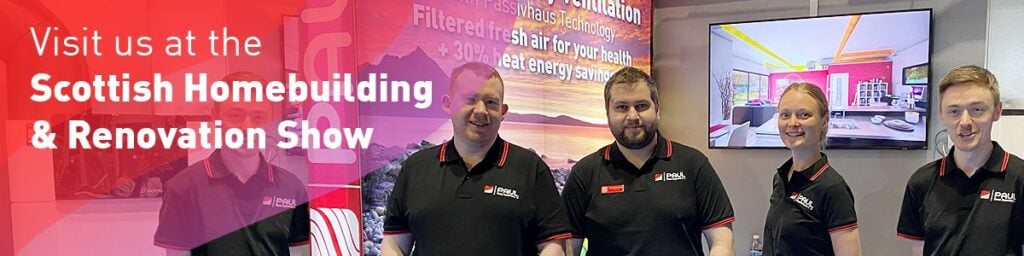
Glasgow Homebuilding & Renovation Show

Scottish Homebuilding & Renovating Show

Scottish Homebuilding & Renovating Show Glasgow PAUL Heat Recovery is exhibiting at the SEC in Glasgow on the 9th and 10th May 2026. Please visit…

Big Magic training

Big Magic Installer Training

Big Magic Installer Training May 2026 PAUL Heat Recovery hosts a product training event for the Big Magic MVHR system on Thursday 7th May 2026…

Launch of Zehnder Academy

Launch of the UK Zehnder Academy

Launch of the UK Zehnder Academy As Approved Zehnder Partner we were invited for the official launch of the UK Zehnder Academy in Camberley on…

Guide on Retrofitting MVHR

retrofit core drilling

Ellora from Her Retrofit Space has compiled a useful guide for retrofitting MVHR.

Retrofit MVHRs

CS50 CA70

Continuous running of MVHR systems to high standards with just one core through the external wall are ideal for retrofitting.

Case Studies of Retrofits

case study

Want to know how retrofitting MVHR into renovation projects turned out?

Addressing Dampness

dampness and humidity

Dampness in Dwellings is detrimental for the occupant’s health and the building structure. How can a suitable ventilation strategy address these issues?

Air Tightness & IAQ

iaq

Are modern houses built too air tight or are they not ventilated correctly? Have a look how the building fabric has changed over the last generations.

MVHR from start to finish

where to start

If you are looking at how an MVHR system can be installed, please look here.

Cascade MVHR

bluMartin freeAir 100

Some renovation projects lend themselves more to Cascade MVHR systems, like the bluMartin freeAir.

MVHR Guide

mvhr guide

Want to know more about MVHR systems. Look at our ultimate guide for beginners.

Case studies and testimonials

mvhr info for end users

Hear what our customers have to say and what the user experiences are with MVHR systems.