Over the last decades homes have become much more comfortable and energy efficient, due to increased standards for insulation and air tightness. On average, modern houses are more than twice as air tight, compared to the pre-millenium housing stock, which additionally benefitted from ventilation through the chimney stack effect of fire places. On top of this, the indoor humidity was regulated by hygroscopic materials, such as lime render.
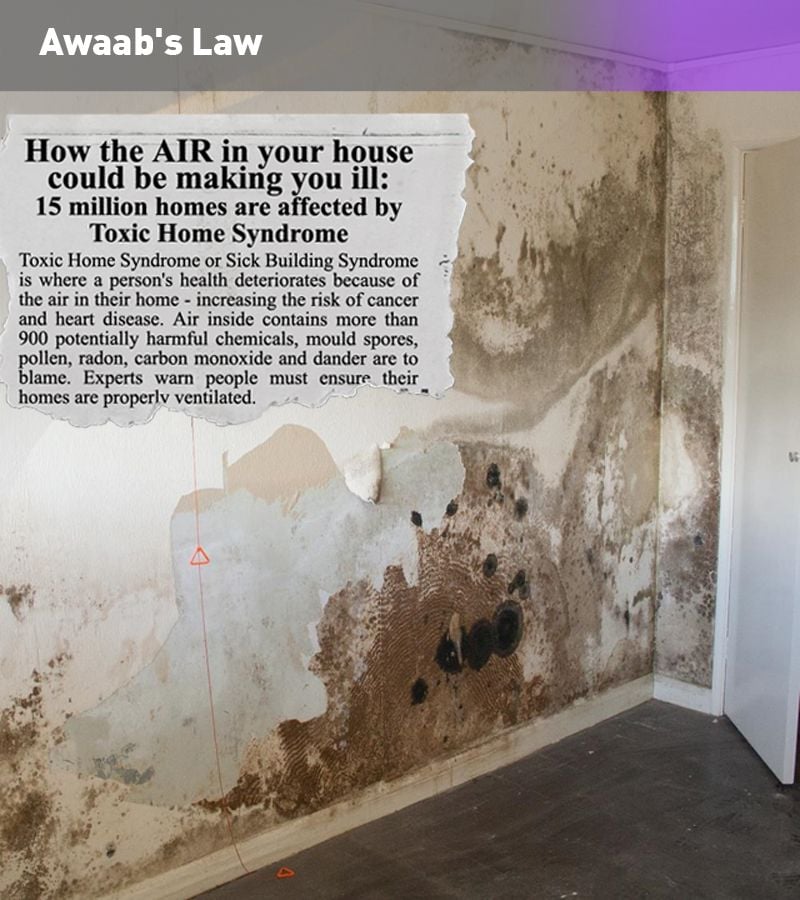
With such great changes in the fabric and function of buildings, concerns have arisen over the indoor air quality (IAQ) of modern and renovated dwellings. A recent study has shown that the average IAQ in modern homes with natural ventilation via trickle vents is alarmingly poor. As most of us spend a lot of time in-doors, a long-term exposure to polluted and oxygen-depleted air is likely to have negative health implications.
What is MVHR and what does is stand for?
In the drive to find a suitable ventilation strategy, mechanical ventilation systems are increasingly used to provide controlled ventilation. Mechanical Ventilation with Heat Recovery, otherwise called Heat Recovery Ventilation (MVHR) is the only form of ventilation that cuts out almost all of the ventilation heat losses, which make up to 30% of the heating demand of a dwelling. No other ventilation method is as predictable and consistent in providing the required amount of fresh air into each room, as well as extracting stale and polluted air where needed.
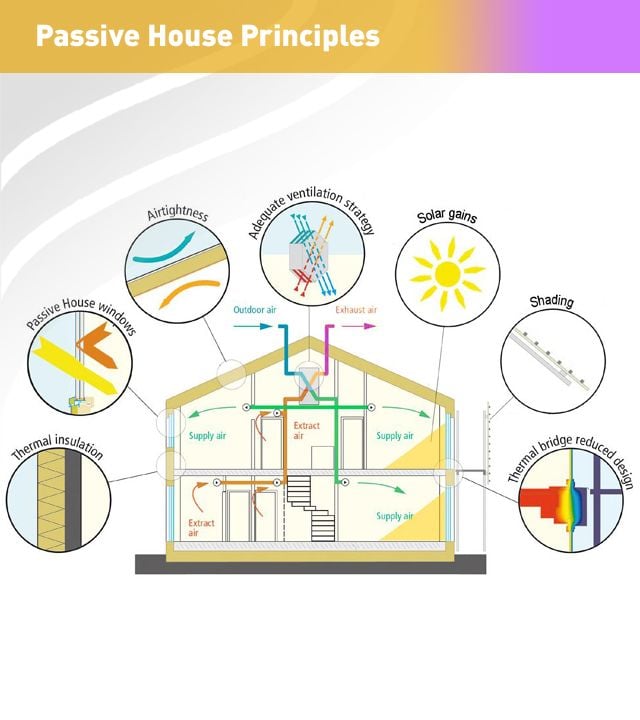
MVHR uses very little energy, compared to conventional Air Conditioning Systems. It goes hand in hand with the fabric first approach, based on passive design criteria, which is becoming increasingly more common as people’s awareness and understanding of its advantages rise. Compared with any other renewable technology, it has potentially the greatest impact on the primary energy use, CO2 footprint and heating costs.

Whether it’s a certified Passivhaus, a low energy building, or a renovation project incorporating Passive principles, MVHR systems are an essential part of the success of these projects. An efficient MVHR system will reduce the heating demand from 35kWh/(m2a) to 15kWh/(m2a) at equal ventilation rates – compared with natural ventilation.
From this, it can be seen that the process of recovering heat from stale, used air and transferring it to fresh yet cold air, has a major influence on energy and emission savings.
However, all modern dwellings, even those without special attention to energy efficiency, can potentially benefit from Heat Recovery Ventilation. Although it is now more often used for residential buildings, it is also suitable for most commercial buildings which are heated and need ventilation.
Besides the energy savings, MVHR systems have a number of other benefits and reasons for its implementation. Occupants with good MVHR systems often value the excellent indoor air quality as the most outstanding advantage.
How does MVHR Work?
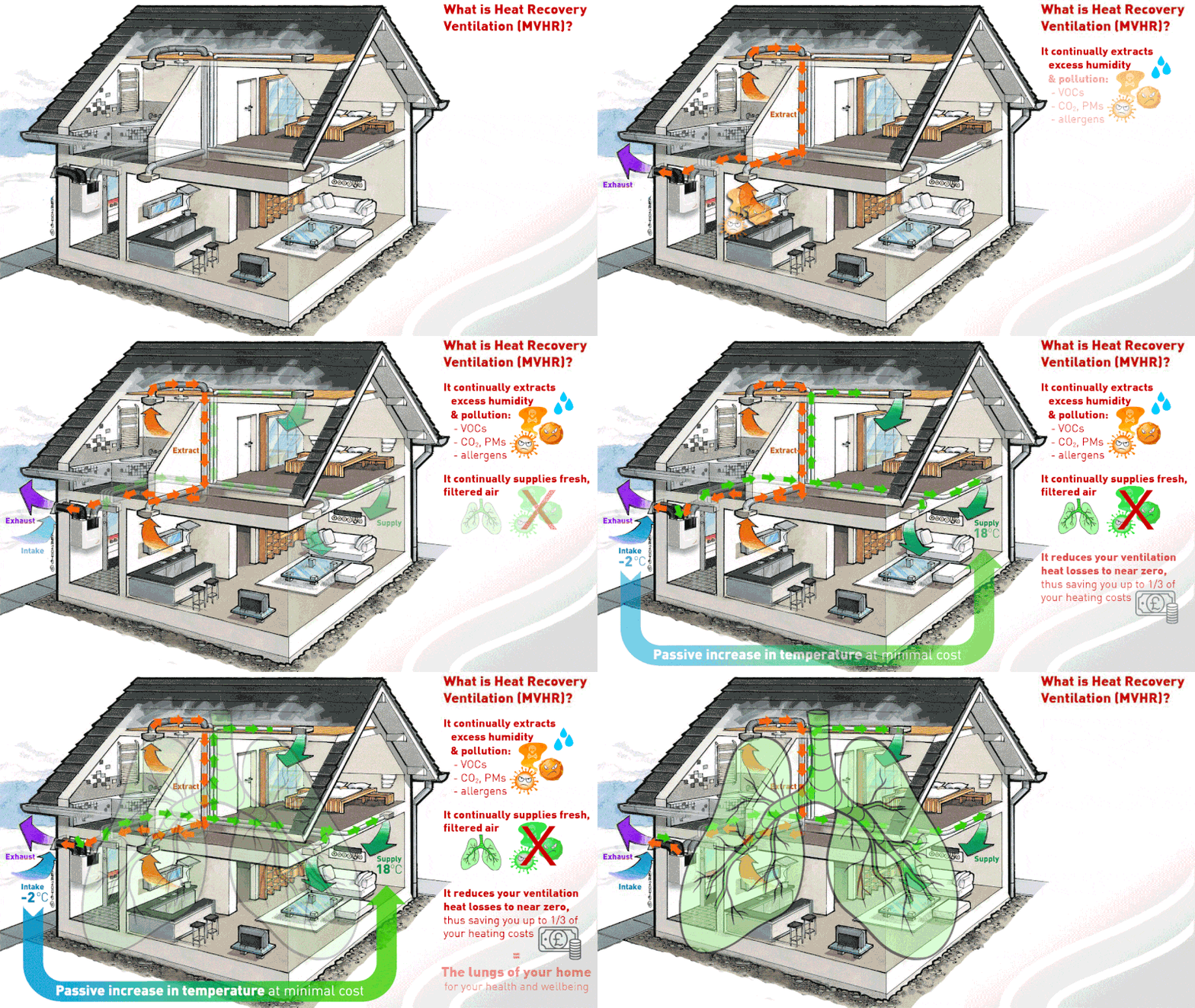
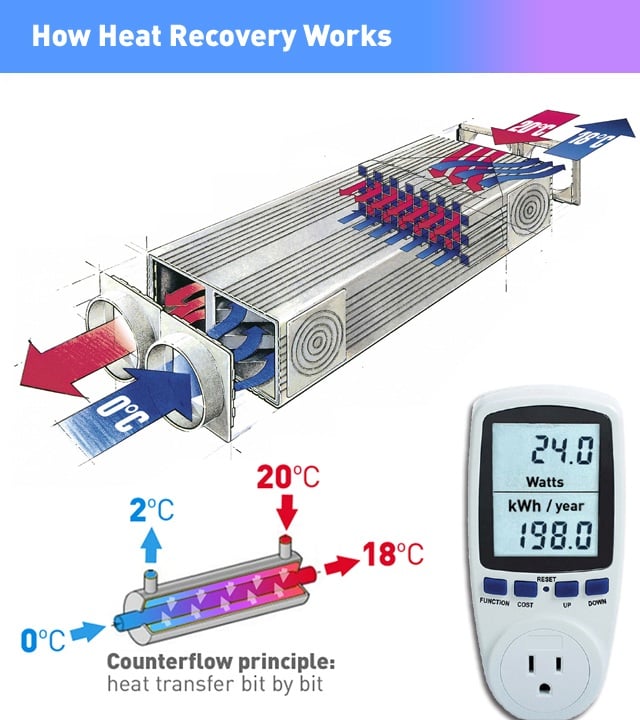
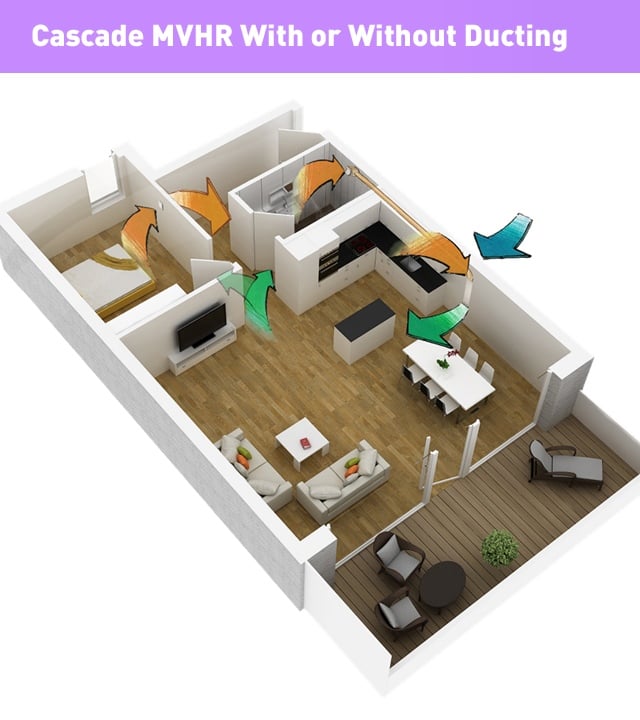
MVHR systems are based on air supply, air extract and transfer zones within the building. A heat exchanger is at the heart of the system, whilst fans provide the air movement. Most systems have ducting to the various rooms.
- Habitable rooms are provided with fresh air and wet rooms and kitchens are extracted on a continual basis.
- Before the extracted air is exhausted out of the building, the heat in the air is transferred by means of a heat exchanger into the fresh air, which is introduced into the building.
- The pre-warmed fresh air is introduced into all habitable rooms on a continual basis. Thereby the need to completely heat the fresh air as it enters the building is eliminated. Efficient systems typically heat cold outside air from 0ºC to 18ºC through the heat transfer, when the extract air is 20 ºC.
- No extract air is re-introduced or re-cycled, thus extracted germs and pathogens will not spread through the system.
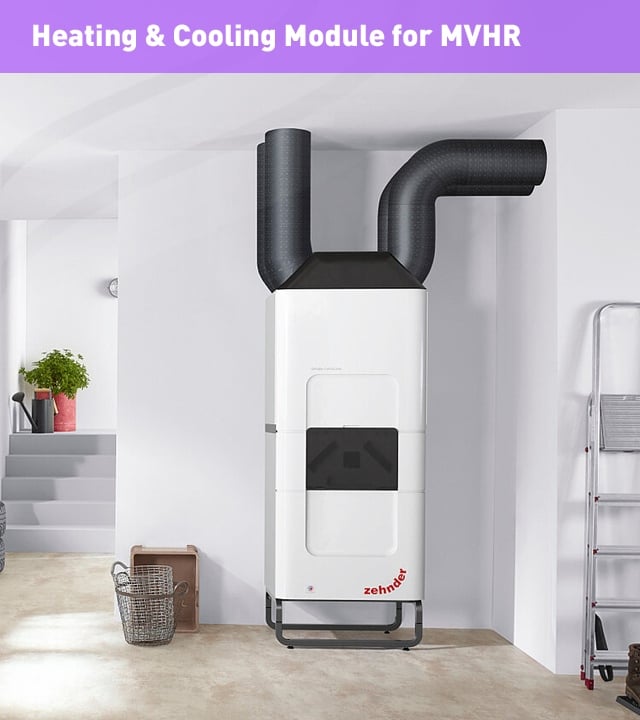
- A gentle cooling effect in the warm season is achieved by a potential summer bypass. The cooling effect is limited and needs to be supplemented by cross-ventilation if there are excessive solar gains. However, some systems can be combined with active cooling (Zehnder ComfoAirQ cool).
MVHR systems are primarily ventilation systems, which reuse and distribute warmth from internal + solar gains and space heating systems. Although extremely efficient, they are normally not to be used for heat distribution or space heating. In some cases (mostly certified Passivhaus buildings) all the space heating can be provided by an MVHR system.
If you intend to use MVHR for such purposes, please let us know in the early design stages. We have experience with such applications and can assist you in determining what can be achieved.
The Benefits of MVHR

Best indoor air quality
- Continuous supply of fresh air to provide good indoor air quality
- No drastic CO2 peaks
- No build up of air pollution, e.g. from carpets, cleaning products or radon
- Elimination of bad odours
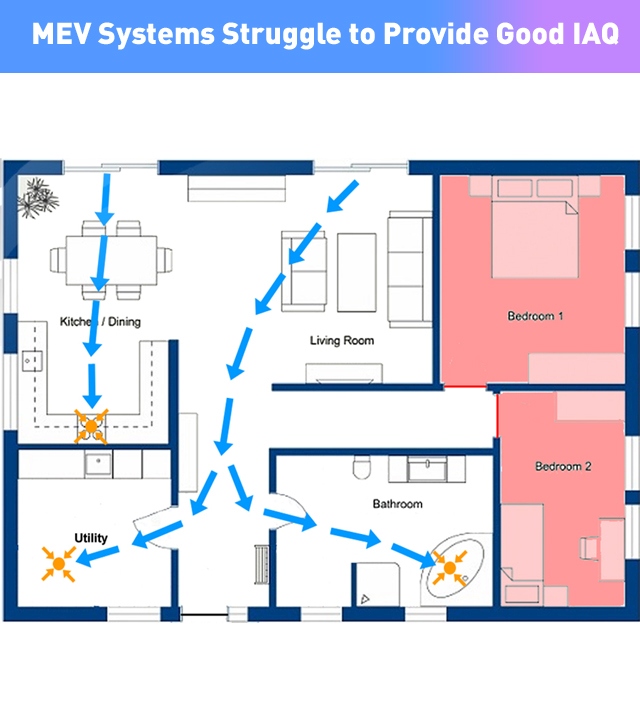
- A controlled air flow path throughout the building, rather than ‘by-chance’ ventilation
Nasties filtered out
- Pollen filters are a great advantage for allergic people
- Filtered air gets rid of most of the pollutants from the outside, e.g. PM from traffic
- Keeps midges out of the house
- Possibility to filter out combustion and traffic smells with activated carbon filters
Humidity Control
- Preservation of the building fabric through steady ventilation
- Keeps mould, fungus, dust mites in check
- Active dehumidification in the cold season
- Reduced humidity keeps dust mites in check
- Some systems provide a monitoring function to check the air quality and humidity
Comfort
- Less noise inside (windows can remain closed); undisturbed sleep
- You can open windows for temperature control whenever you want
- No drafts (in conjunction with an airtight building fabric)
- Good indoor climate

Energy Savings
- Approximately 30% of the heating energy can be saved in airtight buildings with highly efficient MVHR systems compared to naturally (uncontrolled) ventilated buildings
- Little energy use to operate the system
The Disadvantages of MVHR Systems
- MVHR systems have a relative high capital cost at the outset. However, they will save heating costs in the long run.
- MVHR systems often rely on ducting. Although in most buildings it is possible to ‘hide’ the ducting in the mid-floor zone, some few building designs do not lend themselves to ducted systems.
- MVHR systems need maintenance. Most of this is just low-tech filter maintenance and cleaning.
- A bit of investigation is necessary to find a good system provider and installer. In the UK cheap systems with PVC ducting are prevalent and so are short-cuts in the installation process. A study revealed that most of the systems installed suffer from performance gaps. Systems to Passivhaus specification were the only ones that made a difference in the otherwise bleak picture.
When is MVHR Recommended?
MVHR Systems provide controlled ventilation with slow but constant air movements. In contrast, natural ventilation through background ventilators (trickle vents) is a form of uncontrolled ventilation, which fluctuates with wind speeds, temperatures, internal obstructions, such as the opening or closure of internal doors, trickle vents, blinds and curtains. Therefore, it is recommended to install such systems only in properties with relatively good air tightness. We recommend an airtightness of at least 5 m3/(m2*h) at the pressure test (q50), ideally below 3 m3/(m2*h). Air tightness targets should always be set for new built and refurbishment properties.
E.g. in a refurbishment project where windows are exchanged and other measures to increase the insulation and air tightness are being undertaken, MVHR system can definitely be a beneficial addition in the aim to increase the energy efficiency and avoid black mould infestation and the proliferation of house dust mites.

Passivhaus projects and Enerphit projects (refurbishment) rely on best performing MVHR systems due to their high demands on energy efficiency.
Besides the drive to make houses more efficient, there are other reasons, which lead towards the installation of MVHR systems:
- Noise: if a property suffers from noise, e.g. traffic or airport, MVHR systems with adequate silencers will provide a good solution for ventilation without the need to open windows. Additionally, noise reduced glazing will help.
- Air quality: if the air quality is problematic, e.g. for people suffering from hay fever, various kinds of filtration in MVHR systems can deal with pollen, rural and industrial smells. Also, the position of the air intake can be carefully chosen in order to avoid the intake of polluted air from nearby roads.
- High levels of humidity: Besides constant ventilation, MVHR systems will actively dehumidify when it is outside colder than inside.
- Comfort: In areas with high midge infestation, MVHR systems with good tight-fitting filters can help to keep the dwelling free from these pests.
The Passivhaus Trust has released some interesting news to the topic: read here
The Importance of Airtightness
Considering the appropriate insulation level for buildings has become fairly standard. Interestingly, the air tightness of the building envelope is equally important, as it has almost the same effect on the energy efficiency of a building than its insulation. That is the reason why since 2010/ 2011 air tightness tests have become mandatory for new builds and airtightness standards have increased. What is tested is the air leakage through uncontrolled ventilation, i.e. gaps in walls, between walls and windows and doors or the roof. It is an indicator how drafty a dwelling is.
Drafty buildings don’t just cost more money to heat, but they are also uncomfortable to live in. Out of this reason, many a home owner has taken measures to insulate and draft proof their home.
The graph below explains how the air tightness of a dwelling correlates with the heating expenditure.

Graph taken from researchgate.net
However, the more air tight a building gets, the less fresh air comes in and the more moisture and pollutants can build up. A recent study has shown that almost all new built properties are too air tight to be naturally ventilated by background ventilators alone. Either the occupants open windows regularly, e.g. keep windows tilted at night in occupied bedrooms or a suitable mechanical ventilation system is necessary.
Below are the recommendations of Scottish Building Standards for a suitable ventilation strategy in relation to the air tightness of the residential building. The maximum air tightness for new builds in England is 10 m3/(h m2) at 50 Pa and in Scotland 7 m3/(h m2).

- Whole house MVHR (or MEV) is necessary for very air tight buildings, but can be used for the lesser air tight ones as well.
- Decentral continuous Mechanical Extract Ventilation (dMEV) is recommended for the mid to not so air tight dwellings.
- Regarding natural ventilation we have added the comment about window opening, as without user co-operation the air quality will almost certainly not fulfil the standards demanded by Building Regulations.
For more information on dMEV see our air tightness information
Choosing an MVHR system
With a growing number of different MVHR manufacturers and systems on the market, choosing an MVHR unit is not an easy task – unless price is the only criteria. We find that there are huge differences in the quality, the real performance and functionality, which cannot be easily detected.
For simplicity, we have divided the systems into two categories:
• The basic ones, from the main UK ventilation brands
• The high performance and high quality ones, mostly with Passivhaus certification.
Please consider the following table, showing the difference between the two categories:
| Basic MVHR | Quality (PH) MVHR | |
| Fan control | The output drops with increased resistance (fan curve tails off towards zero at max. output). With increased resistance from soiled filters the ventilation rate will drop and the system will dis-balance, thus reducing its heat recovery rate. | Volume flow constant (fan curve has a vertical drop at maximum output level).
The ventilation rate will not change over time and the system will not dis-balance. |
| Insulation | Minimal insulated housing with cold-bridging. This will lead to good heat recovery rates ‘on paper’ but to increased heat losses in reality. | Well insulated, thermal bridge-fee housing. You can see the difference to cheaper systems when you compare the Passivhaus certification data. |
| Noise | High Break out noise and in-duct noise levels due to cheap fans, lack of insulation, tight spaces and sharp corners. | Low noise levels. E.g. 1x basic MVHR produces as much noise as 8x Zehnder CAQ units at the same output level. |
| Frost protection | Frost protection disbalancing will reduce the heat recovery rate gradually down to zero in the coldest time of the year, thus leading to ice-cold infiltration, exactly when you don’t want it. | A de-frost pre-heater will keep the MVHR working on its peak efficiency in the coldest time of the year. |
| Humidity control | Larger dwellings with a disbalance between occupancy levels and ventilation requirements can easily become too dry in winter, due to the de-humidification effect of MVHR. | The choice of an enthalpy heat exchanger will prevent such over-dehumidification as they recover heat and moisture. |
| Filters | Basic G3 type filters with a low surface area and often loose fitting. These will allow smaller dust to enter the system and will lead to gradually soiled ductwork. | F7 pollen filters for the air intake will filter out finer dust, pollen and pollution, which keeps the house and ductwork clean. |
| Controls | Basic controls | A choice of various types of controls |
| Durability | Often the whole unit needs to be replaced if something goes wrong. | Made to last; all components can be exchanged individually. |
Generally, the capacity of a MVHR unit should be high enough to cover the nominal ventilation rate and at least 30% additional boost capacity. Ideally, the unit should run at 60-65% of its maximum capacity to work efficiently. If the system is running on higher output levels, this will increase the noise and energy use over-proportionally.
Among all technical specifications, please also consider the level of support and after sales that a supplier will offer. Unfortunately, the domestic ventilation industry in the UK is dominated by performance gaps and a “sell-and-run” culture. We are often contacted by customers of various brands, asking for support and maintenance, which their supplier does not offer.
Types of Ducting used for MVHR
Most domestic ventilation systems in the UK are based on PVC ducting. A choice that most other European countries have done away with (for good reasons).
Please see below table for a brief comparison of the most common ducting types. We have not mentioned flexible ducting, which has often been used in the past, as this is so poorly performing that it should only be used for very short lengths, if at all.
| PVC ducting | Galvanised spiral ducting | Radial semi-rigid ducting | |
| Type | Rigid ducting | Rigid ducting | Rigid ducting |
| Sizes | 100, 125, 150mm or flat channel ducting, e.g. 56x 110, 60x 204, 90x 220mm | 100, 125, 160, 200mm dia. | 75/63 and 90/76 mm outer/inner diameter |
| Efficiency | High resistance due to sharp bends (0.5 d radius).
Sample pressure drops*: 204x60mm: 265Pa |
Low resistance due to better formed bends (1d radius). Low velocities due to larger size.
Sample pressure drops*: |
Low resistance (radius can be as shallow as possible). Low velocities of 90mm ducting/ multiple duct runs.
Sample pressure drops*: |
| Air tightness | Flat channel ducting is difficult to get permanently air tight. Do not use tapes! | Recommended: SAFE system has double seals at all joints. | Few joints in each branch, seals used for air tightness. |
| Clean-ability | Difficult to clean. Impossible for flat channel ducts. | Can be cleaned. | Can easily be cleaned. |
| Hygiene | Questionable, as pathogens can grow on PVC over time. | Inherently excellent. | Excellent, when anti-static and anti-bacterial lined. |
| Ease of installation | Easy to cut | More time consuming. Cutting with grinder or metal shears. | Easy to install, especially when going through floor joists (web or engineered timber) |
| Price | Cheap | Expensive | Middle range |
| Our recommen-dation | Please avoid it, unless for short extract only systems. | Best for very small systems or long-stretched ones. | Best for most MVHR installations. Please note that there are major differences in quality between different makes. |
*) Sample pressure drops based on 5m ducting with 5x 90 deg. bends at 210 m3/h and 30m ducting with 20x 90 deg. bends at 55 m3/h or equivalent for radial ducting. The higher the pressure drop, the higher the resistance. Doubling the pressure drop will result in 3-4 times more noise and energy use.
Please consider that any ducting installed within your floor zone or cavities will stay there for a long time and should be of high quality.
Branch System
- Rigid metal ducting, round (Spiral ducting): Highly efficient and hygienic ducting. we recommend the safe system with double seals at all connection points. Standard dimensions of 100, 125, 160 and 200mm are used for domestic applications. The disadvantage is the number of different components (T-pieces, reducers, bends) and that the design and installation process is quite intricate. Also, cross-talk silencers need to be installed between the bedrooms.
- Rigid plastic ducting, round or rectangular: Needs to be glued together. Such ducting has a much higher resistance as the plastic bends have a very sharp radius. Due to this it often costs more money to operate such a system. Rectangular ducts have the advantage of a low profile, but they have even worse airflow properties and can never be cleaned any more. Also, cheap materials can give away chemicals and are not as hygienic. Therefore we generally do not supply this ductwork.
- Flexible ducting: It is very inefficient and hardly ever cleanable. It is recommended to avoid fragile materials as foil or plastic ducting and rather use canvas material with wire. Flexible aluminium ducting tends to be rather noisy. Strict guidelines on installation have to be adhered to and all connections have to be secured with jubilee clips as tapes can come off through fatigue of the adhesive or movements. We do not recommend to use this ductwork.
Radial System
- Semi-rigid ducting, round: The system is based on one extract and one supply manifold with continuous hoses into the various supply and extract rooms. We offer Polyethene hoses, which are relatively smooth on the inner surface and therefore almost as efficient as spiral ducting. Besides the high hygienic qualities, it is also easy to be cleaned. The installation is easier than metal ducting. The ducting we supply has a 90mm exterior and 76mm interior diameter. While we keep to the best practice 2.5m/s flow speed, in most cases one duct per room is sufficient. We source our components from various suppliers, in order to provide the highest quality system. Lindab’s InDomo system is one of our suppliers.
How much does an MVHR System cost?
There are five types of cost to be considered:
A) Design and consulting costs
B) MVHR unit
C) Ducting
D) Installation and commissioning
E) Ongoing costs, such as filters.
You may want to add the life-cycle costs, e.g. based on durability and if parts can be changed.
The question is, what level of quality, functionality, durability and service do you want.
Please find below a price example for the two types of systems, based on a 3-bedroom house (2019 prices).
| Basic MVHR | Quality (PH) MVHR | |
| Design + Consulting | Sometimes free (2d, basic design) | £745 (3d, detailed design, project consulting, management) |
| MVHR unit | £1,200 (Greenwood Vireo
HR155 WM, no pre-heater) |
£2,786.84 (Zehnder ComfoAir Q350 with
pre-heater, smart app control, incl. discount) |
| Ducting | £1,600 (PVC and flexi-insulated
Ducting, PVC terminals) |
£2,250 (Quality semi-rigid and
high insulation EPP ducting, metal designer terminals) |
| Total | £2,800 (excl. VAT) | £5,130 (excl. VAT) |
Where do you install an MVHR Unit?
MVHR units are fairly sizeable, especially the better ones. This is because air needs space to move efficiently and quietly and a good insulated housing will add to the size of the MVHR unit.

Three things should be considered for the situating of the MVHR unit:
- Easy access for filter changes and maintenance. For accessing your MVHR unit, you probably don’t want to balance over a stretch of ceiling joists, whilst trying not to stick your foot through the ceiling.
- Maintenance space around the MVHR unit (typically 500mm in front of the unit).
- Ideally the unit is situated in a central location, which minimises duct runs.
- Often the unit is placed within the thermal envelope, e.g. a utility room, plant room, warm loft or store room. In this case the unit should be close to an external wall, which keeps the intake and exhaust ducts as short as possible.
- Well insulated units can also be installed outside the thermal envelope, e.g. in a garage: In such case situate the unit close to the partition wall of the house, in order to keep the supply and extract ducting as short as possible.
- Smaller MVHR units can also be ceiling mounted with a maintenance hatch. In this case the unit should be close to the external wall with the intake and exhaust penetrations.
- If all this is not possible, MVHR units can be installed in a cold loft. In this case particular attention need to be paid that the supply and extract ducting, which carry ambient air, are not exposed to the cold. Ideally these are placed fully underneath the loft insulation. If this is not possible for some lengths of ducting, these need to be insulated well. The UK standard is 25 mm of quilt insulation (or equivalent), but we find that it should rather be 50mm to 100mm of quilt insulation with aluminium foil coating.
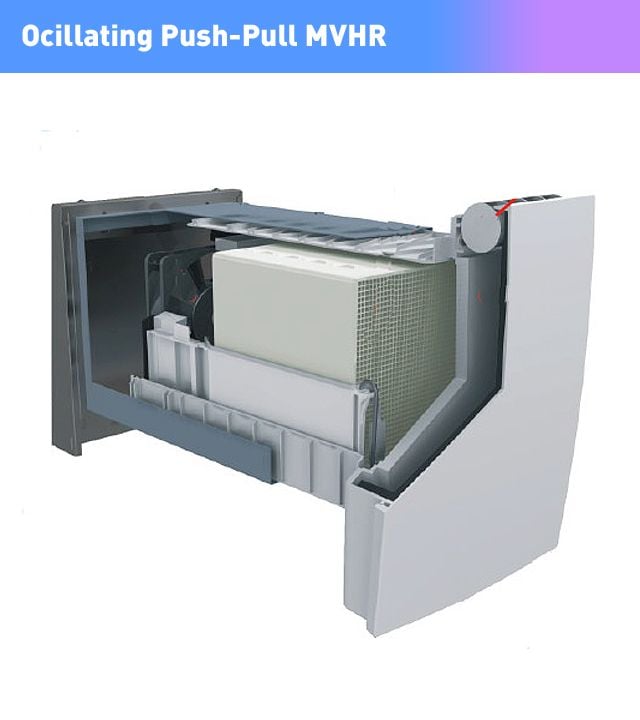
- Smaller de-central MVHR units, e.g. BluMartin’s freeAir 100, are situated within an external wall.
Can I install an MVHR system myself?
We find that self-builders, who install an MVHR system in their own house, most of the time do a very good job, even if they have got no relevant experience. This is probably down to three reasons:
- They want to get it right
- They take the time needed
- They ask the right questions
Unfortunately, this is not typical for the average trades person. Out of this reason we have made it policy to give trades people some training before they start installing.

We are there for our customers to give advice and training if necessary. We have also produced a general installation guide and will give some detailed 3d design drawings for all projects. All products are of high-quality and assemble pretty well. Please be aware that the ducting is fairly chunky and should be installed before any other trade installs their services.
Can you Retrofit an MVHR System?
Whenever existing properties are being upgraded with additional insulation, new windows and draft-proofing, this will affect the natural infiltration rate, with reduced fresh air coming in and stale air being taken out of the building. Statistically, following such renovation works, the risk of black mould growth triples. Unfortunately, most UK energy efficiency advice services do not consider the impact, that their suggested improvement works will have on the internal climate of the building. To avoid any surprises with negative impacts on the occupant’s health, in all such cases the ventilation strategy needs to be (re-) considered.
We have accompanied a number of retrofit-installations of MVHR systems in renovation projects. It depends on the design of the dwelling and the nature and extent of the renovation works, if it is possible to install a whole house ventilation system or a system that serves only part of the dwelling.
- One storey buildings/ bungalows are often the easiest ones to retrofit, as ductwork can possibly be installed in the loft area with minimal disruption.
- One and a half storey buildings with eave spaces also present a suitable service zone for ducting.
- For two storey buildings with a loft it is sometimes possible to run risers through in-built wardrobes or service shafts into the ground floor.
- Unlike engineered timber joists, solid timber joists cannot be drilled for duct runs within the floor zone. However, sometimes parts of the ceiling can be suspended.
- Alternatively de-central MVHR systems within external walls are an option.
Visit our FAQ’s page or reach out to us directly if you may have any further questions regarding MVHR Systems.
What to watch out for when installing MVHR?
Please note following points:
- Have you got a detailed duct design? Have you checked the design, especially if there are any beams obstructing the duct runs?
- Consider carefully where the intake and exhaust is to be positioned. Avoid strong wind exposure, any possible contamination, e.g. SVP or neighbour with wood stove. If possible prefer external wall grilles over roof cowls.
- Is there a lighting plan to be considered for the co-ordination of room terminals?
- Choose the type of ducting that suits the building. E.g. very small systems with few room terminals or long buildings with long parallel duct runs are better done in metal. Engineered timber joists and metal web joists lend themselves to semi-rigid ducting.
- Choose a quality manufacturer of ducting, terminals and MVHR (see above).
- Don’t forget appropriate machine silencers/ attenuators. For branch systems, please also install cross-talk silencers. All of these are not a good item for cost-cutting.
- Decide whether you want to install the system yourself or get a professional company on board.
- Please do consider the timing of the installation and the lead times for design, supply and installation. The first fix should be done before the other trades have filled up all the service zones.
- Choose any installer carefully. Check if they have installed that particular kind of MVHR and ducting system beforehand and verify they have a good track record.
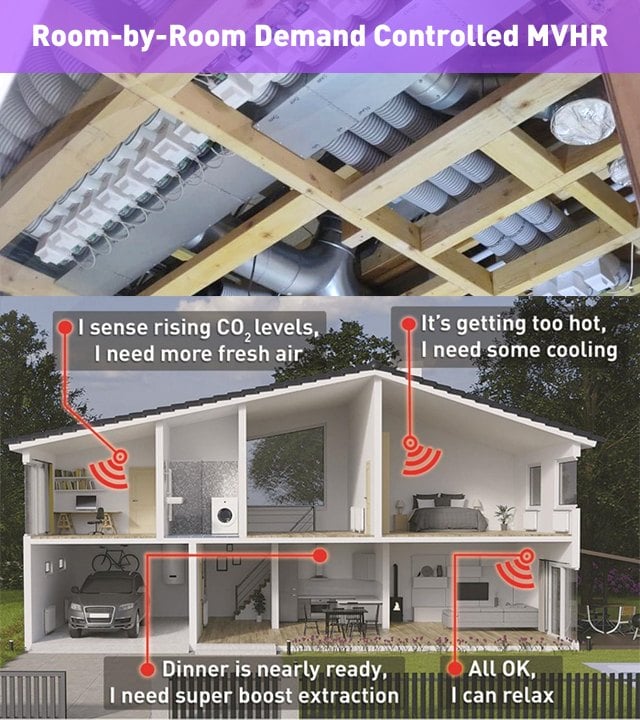
- Please do get a professional company on board for the commissioning of the system. Unless you installed a fully demand controlled system (e.g. BluMartin freeAir 100), all whole house MVHR systems need commissioned, in order to work as they should. Please be sceptical if companies offer this service only as an optional extra.
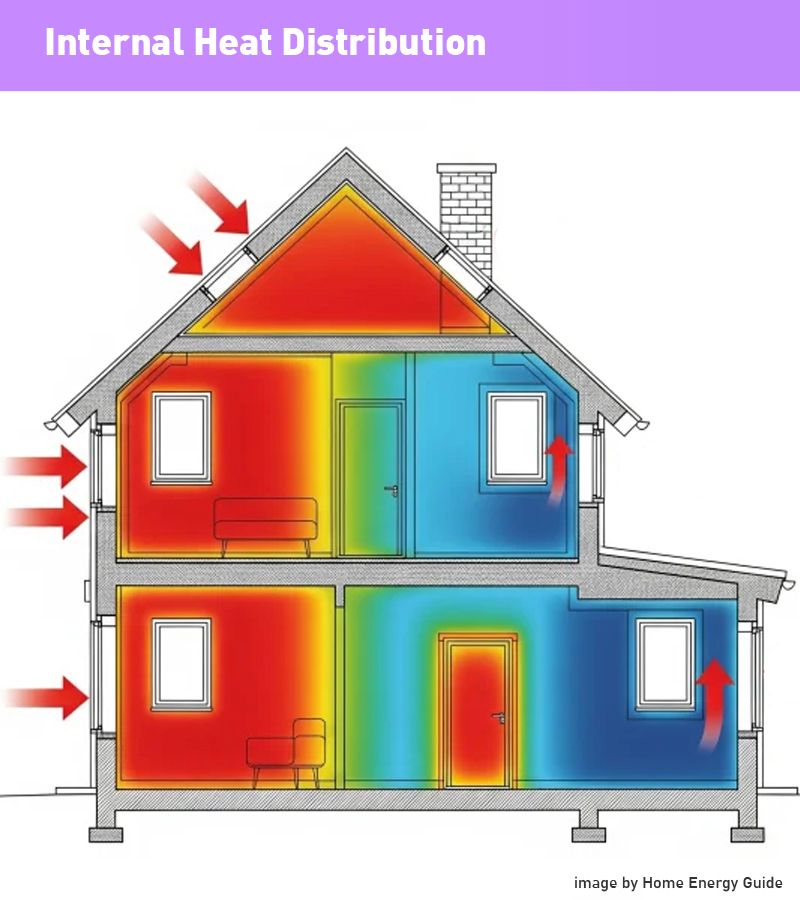
Does MVHR level out temperatures between rooms?
The simple answer is: No.
Although a good MVHR system looses hardly any heat, temperatures between rooms can vary between 4 and 6 degrees C, in extreme cases up to 10 deg. C., depending mainly on the heat losses of the fabric of a particular room and the internal heat transfer. This is really good news as many people don’t want their bedrooms as warm as their living spaces. It also means that MVHR systems cannot be used for distributing space heating from heated to un-heated rooms, unless a post-heater or a special set up of the system is being used.
The reason for this seeming paradox is that MVHR systems as based on slow air movements and air has a limited capacity to carry heat. E.g. if we supply 30 m3/h pre-warmed air at 18 degrees C. into a particular room of 14 deg. C room temperature, we introduce 41W of heat through the air into this room. Even if this was a Passivhaus, the room might have up to 200W heat loss in winter, so it will cool down to a certain degree.


Government Urged to Fund Ventilation 'Revolution'
Fresh air - the forgotten weapon in the fight against Coronavirus
NEW Passivhaus study shows MVHR is the best ventilation strategy for every home!